Thursday, March 30, 2006

It Was Good While It Lasted

Histimine molecule

Well, that was an exciting run - one whole day of feeling good. Wahoo!

My allergies started to act up again last evening, and I woke up feeling awful this morning. This is something that has fascinated me ever since I first got sick with CFIDS...how can you sleep for 9 hours and wake up feeling worse than when you went to bed?? I'm doing OK now, just not full of energy like yesterday.

So, did my allergies make me feel poorly today or did I do too much yesterday, kicking off a post-exertional crash that made me over-react to allergens? Which came first, the chicken or the egg?

I seem to have developed a new allergy in the past week- how exciting! For the past 10 years, I've had fairly low-level allergies to dust mites and molds that are pretty much the same year-round. I take some allergy medications and don't think too much about it. Last week, after our overnight at the beach, my eyes suddenly became horribly irritated - sore and constantly watering. Yesterday was the only day in the past ten days that I've been able to wear my contacts (and I don't have much patience for glasses!). This happened to me last summer when we went to South Dakota, but it's rare for me to have such an acute allergic reaction here at home.

I saw my doctor today, just my every-few-months check-up. I'm very fortunate to have a doctor who understand CFIDS. She's often not able to do much other than listen, record new symptoms, and refill my prescriptions, but it's still comforting to see her, to know that she's there in my corner if I need her. She had some suggestions today for additional allergy medications and told me that allergies are off the chart for everyone around here right now. I guess we're paying for our unusually warm winter.

So, I'll try the things she suggested and will hopefully get some relief for my poor eyes. Of course, the irritated eyes aren't the real problem; when allergies flare up, so do all my other CFS symptoms. The achy legs and lack of energy are far worse than having to wear glasses.

I'm very much looking forward to camping this weekend. It's always so relaxing for the four of us to get away together, with no stress or pressures. Now I just need to get through the next 24 hours of packing and preparation.

Wednesday, March 29, 2006

Slow and Steady Wins the Race

I'm back! After a week and a half-long crash nestled in a month of barely getting by, I feel GOOD today. What a treat!

Even the weather cooperated today. After a mostly cold March, today truly felt like spring with bright sunshine and 70 degrees. Here in Delaware, forsythia blooms at this time of year. Its vibrant yellow blossoms along roadways, fields, and neighborhoods represent spring to me.

I reveled in a forgotten sense of freedom today. Not only did I feel good, but both of my boys felt good and were off at school. My wonderful and incredibly patient friend Amy has been waiting weeks (months?) for this unlikely alignment of the stars so that we could go shopping together. We went to Trader Joe's, a fabulous whole foods store, and I stocked up (never know when I'll be able to get out again).

Ironically, now that our cupboards and fridge are overflowing, I ordered Chinese take-out for dinner! I've learned the hard way that shopping can easily use up my allotment of energy for the day. To also cook dinner would be asking for trouble.

It's so hard to moderate my activity level when I feel good. I want to do everything and make up for lost time. It still astounds me that exercise can feel so good when I'm doing it and result in my feeling so horrible a few hours later. I've long believed that this unique and mystifying reaction lies at the heart of unraveling CFID's secrets.

So, I'm taking a break but still enjoying this gorgeous day. I brought the laptop out onto our deck in my reclining chair to absorb all of this sunshine and sweet spring air. We're planning to take our pop-up trailer out for the first camping trip of the season this weekend. I need to pace myself so I can make the most of this fleeting gift of energy.

Friday, March 24, 2006

Weekly Inspiration: The Power of Hope

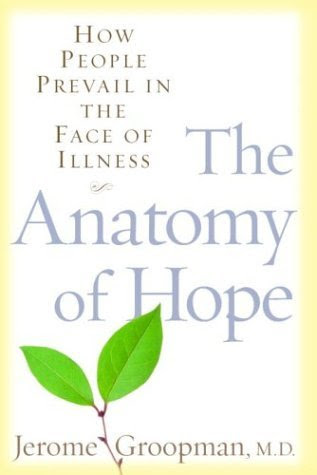
The first time I read The Anatomy of Hope by Dr. Jerome Groopman, I was pretty much at rock-bottom. It was at the end of my second year with ME/CFS, and I was in a terrible relapse. I was feeling that my health and my life were entirely out of my control. This book had an immediate positive impact on me (to see my full review, check out my book blog). 

Although Dr. Groopman is an oncologist and the patient stories in his book deal mainly with cancer, his conclusions about the nature and power of hope are relevant to anyone living with chronic illness. In addition, Dr. Groopman recounts his own 20-year struggle with debilitating back pain. 

He describes living with pain and restrictions in a way that is familiar to anyone with CFS: 

 "The boundary of my life was like an electrified fence at the perimeter of a prison; if I ventured too far and tested it, I was thrown back from the shock of its force into my confinement. If I stayed inside the fence, I was somewhat safe. So, I assessed each movement and task of the waking day for its distance from that perilous perimeter." 

Dr. Groopman carefully defines hope as just one aspect necessary for healing, not a miracle cure. He echoes my own feelings when he points out that many of the popular books on the power of positive thinking blame the patient if positive thinking alone doesn't cure them. If you're still sick, you must be doing it wrong.

Instead, Dr. Groopman defines true hope in words so comforting and encouraging that I have hung them over my desk: 

"Hope is the elevating feeling we experience when we see – in the mind’s eye – a path to a better future. Hope acknowledges the significant obstacles and deep pitfalls along that path. True hope has no room for delusion. Clear-eyed, hope gives us the courage to confront our circumstances and the capacity to surmount them. 

There are real options and I have genuine choices. 

What I do can make a difference. 

My actions can bring a future different from the present. 

I have some control over my circumstances. 

I am not entirely at the mercy of forces outside myself." 

I found these words so empowering at a time when I felt I had no power over my body. It helped me immensely to realize that, no matter how debilitated I felt, there were always some things I could do to help myself: read an uplifting book, watch a funny movie, get outdoors for some fresh air, take better care of myself, and rest when I needed to. 

I've always felt strongly that life is all about choices, that you need to take responsibility for your own life and not be a victim. Now I realized that I had fallen into a victim mentality since becoming ill. It's pretty easy to do, when such a debilitating illness suddenly seems to take over your life. 

Groopman's book made me recognize that I still had choices, within the confines of my illness. I could decide when to rest more or when an activity was worth risking a crash. Even at my worst, I could decide to stay in a positive frame of mind rather than wallow in self-pity. 

Besides feeling better spiritually, replacing negative emotions with positive has some real physical benefits. We know that people with ME/CFS don't respond to stress well, that our brains don't produce the right amounts of stress hormones at the right times. It's reasonable, then, to accept that reducing stress and negative emotions will at least help to prevent a worsening of our symptoms. 

So, after succumbing briefly to despair one evening this week, I reread The Anatomy of Hope and tried to make the best of my bad week. I read a lot, wrote on the laptop when I was able, watched a great movie (Elizabethtown), and listened to some favorite music. I also made myself go outside each day, even if I could only make it as far as the front yard, to feel the sunshine and fresh air and watch my boys play. It may not seem like much, but just knowing that I have some control over my life helps a lot.

Read my full review of The Anatomy of Hope at my book blog, along with multiple options for where to find it.

[Update 6/23/22: Eight years ago, my dad was diagnosed with melanoma, probably already at stage 4 at diagnosis. His prognosis was poor, and in fact, he did die one year later, at age 70. I was devastated and still miss him every day, but that last year we had with him was so special and irreplaceable. Immediately after his diagnosis, I sent him The Anatomy of Hope, and he read it cover to cover. I also printed those same quotes I included above for him to hang in his room. Although, obviously, hope didn't save him in the end, I do think this book had a significant effect on that last year for him. My dad was something of a pessimist generally, but reading this book seemed to move him into a more positive frame of mind. For that entire last year, right up until the cancer moved into his brain and he went into hospice that last week, he remained optimistic and kept fighting and trying treatments. I can't know, of course, but I suspect he would have given up much sooner and not lived as long (or as well) without that hope to sustain him. And that last year meant so much, to him and to us. We spent a weekend with him every month (he was 8 hours away)--even his teen grandsons willingly gave up their weekends to spend time with Grandpa! We talked and laughed, played cards, ate his favorite foods, watched old home movies, and enjoyed each others' company. So, I do believe that this book helped him ... and it has certainly had a huge positive impact on my own life.]

The Anatomy of Hope is available through Amazon or through these other options:


Listen to a sample of the audiobook here, from the introduction, and/or download it from Audible.


You can buy the book through Bookshop.org, where your purchase will support the indie bookstore of your choice (or all indie bookstores)--the convenience of shopping online while still buying local!


Note: This post contains affiliate links. Purchases from these links provide a small commission to me (pennies per purchase), to help offset the time I spend writing for this blog, at no extra cost to you.


Wednesday, March 22, 2006

Chronic Illness and Hope


In search of comfort and inspiration today, I turned to one of my favorite books, The Anatomy of Hope by Dr. Jerome Groopman. As with earlier readings, Dr. Groopman’s stories of how hope (or its absence) deeply affected his patients’ lives pulled me right in and invited me to compare my own sense of hope with the tales in his book.

After reading about several patients who lacked hope, who gave in to despair, I thought about my own situation. I try to be optimistic (which Dr. Groopman says is different than hope), but what are my own barriers to true hope? I certainly think that my condition may improve somewhat over the years, but I realized that I don’t truly believe that I can recover.

In part, my scientific background gets in the way. I’ve read everything I can about CFS and follow all of the research closely. I know that scientists don’t yet know what causes CFS or how to cure it. I know that there are no effective treatments (yet). Worst of all, I am painfully aware that very few people ever fully recover; various studies estimate a recovery rate of somewhere between 2 and 10%. My analytical mind has absorbed those statistics and made them a part of me.

Dr. Groopman tells one story that really sticks in my mind, of a pathologist colleague of his who was diagnosed with a particularly deadly form of stomach cancer. He knew, from his own professional experience, that the recovery rate for this cancer was almost zero. Only 1-2% of people with this cancer live six months after diagnosis; less than 1% survive to nine months. Yet, this pathologist, with this scientific knowledge deeply ingrained in him, ignored the death sentence and embarked on a difficult treatment path that most of his colleagues thought to be foolish. He allowed himself to believe that he had a chance, albeit a tiny one; he beat the odds and survived.

I’ve tried to convince myself similarly that I can be among that 5% or so that recover from CFS. Sure, it’s unlikely, but why not me? Oddly enough, though, when I occasionally read of someone’s miraculous recovery from CFS, my first reaction is not inspiration but skepticism. I think they were probably misdiagnosed to begin with; they couldn’t have really had CFS because there’s no cure for it. How do I overcome this skepticism and encourage true hope in myself?

The uncertainty and supposed controversies surrounding CFS make matters worse. With the public and even some doctors doubting the severity of CFS, if not its very existence, what would it mean if I were to recover in the absence of a known medical cure? I know intellectually that this is an absurd thought, that I would welcome any relief from this devastating illness. Emotionally, though, it’s a fear lurking beneath the surface. Would recovery somehow negate the suffering I’ve endured these past four years or the plights of so many other people with CFS? I need to find a way to get past these illogical thoughts so that I can picture a better future for myself.

I certainly have no trouble picturing some improvement in my future, and I often focus on that goal: to find ways to improve my condition, a little at a time, to improve the quality of my life and my ability to do the things I enjoy. CFS requires a careful balance of hope and acceptance. Some level of acceptance is necessary in order to get through daily life and avoid crashes. To ignore my limitations would be to sentence myself to constant relapses. I am constantly searching for the right balance and for ways to keep real hope alive in my heart.

Tuesday, March 21, 2006

Riding the CFIDS Rollercoaster

Another song stuck in my head today:
When I get to the bottom
I go back to the top of the slide
Then I stop and I turn and I go for a ride
Till I get to the bottom and I see you again...
- Helter Skelter (Beatles and remade by Cheap Trick, U2, etc.)

Whee! In case you haven't guessed, I'm at the bottom of the slide today. Sometimes I just get so sick of these constant ups and downs.

We had a very nice weekend. For the first time in weeks, no one had a fever or required urgent medical attention! We took advantage of our good fortune Saturday and finally made the trip to the beach that we've been putting off for weeks. We've all really been looking forward to this little tradition of ours, escaping to the beach for a mini winter vacation.

We packed up Saturday morning (we've learned not to make advance preparations!) and headed out of town in high spirits. It was cold and windy this weekend, but the sun was shining and the change of scenery was just what we needed. We walked on the beach and deserted boardwalk, ate lunch at our favorite fish & chips place, browsed through bookstores, took a swim in the hotel pool, and just took it easy. Not easy enough for me, though, I guess.

My stamina has been very poor lately, and I guess I was on my feet too much, even though it didn't seem like much at the time. I could tell I was crashing by Sunday morning as the familiar aches crept into my body. I tried to pull back - sitting in the sand watching my boys play, sitting on the floor of the bookstore to browse the lower shelves - but it was too late. By Sunday night, I felt horribly sick, and Monday was a torturous blur spent flat on my back. I'm doing slightly better today - well enough to sit up briefly and use my laptop anyway.

I try so hard to stay positive and optimistic, to accept my "new life" and make the best of it, but sometimes it just seems unbearable. I hit bottom last night at bedtime, sobbing to my husband. At times like this, the thought of living like this forever is terrifying.

How can an easy-going 24-hour getaway make me so sick? How can I achieve my writing goals if I'm unable to make commitments for fear of not being well enough to meet them? I love to travel, to see new places, to explore the world, but I can barely manage a single night away from home.

OK, deep breath. I need to vent my frustration, but I also recognize that I have to try to regain my more optimistic outlook if I hope to feel any better. Stewing in self-pity only makes me feel worse.

First I need to remember all that I have to be thankful for. No, I don't have my health, but I do have a wonderful husband and children who bring a lot of joy to my life. And I do recognize, even during my darkest times, that I am truly fortunate not to be even sicker. Whenever I go through a bad crash like this, I always think of all the people with CFIDS who feel that bad every single day. I just read another wonderful article about Laura Hillenbrand. She's been far sicker than I have, for far longer, and look at what she's accomplished. What an inspiration!

Most of all, although it sounds trite, it's crucial for me to just focus on one day at a time. Considering a lifetime with this illness is too overwhelming. Thinking about all that I want to do with my life in light of my current restrictions is just too depressing. Better to focus on small goals, on getting through each day, even each hour. So, today I'll try to take advantage of this forced downtime to read some more (another thing I'm grateful for, that I can still read!). I'll rest aggressively to help myself get back to where I was as soon as possible, maybe some gentle stretches later. One...day...at...a...time.


Tuesday, March 14, 2006

Sitting Here in Limbo

For the past few days, the title lyrics from a song by jazz-duo Tuck and Patti have been running through my head: “Sitting here in limbo.” That’s exactly how I’ve been feeling – in limbo.

We had another weekend filled with illness. This time it was 11-year old Jamie. He had a fever of 103 on Saturday and has been coughing since Thursday. With his CFIDS-activated immune system, it’s unusual for him to catch a virus, but when one does make it past his defenses, it really knocks him out. Today is his 6th day with a fever, and the cough and congestion have been keeping him up at night. He came for breakfast this morning crawling on his hands and knees because his legs hurt so much he couldn’t stand up.

The worst part about this weekend’s confinement was that the weather was unseasonably perfect, with sunny days and temperatures in the 70’s. We had planned to take a mini-vacation down to Rehoboth Beach here in Delaware this weekend and were all disappointed to have to cancel our plans.

Craig was feeling fine, so my husband, Ken, was busy keeping him engaged all weekend, while I stayed home with Jamie (other than a trip to the pediatrician’s office). This division of child care makes sense, since my stamina is still pretty low, but I’m getting a little stir crazy.

Yesterday was the worst of it. Craig was home sick from school. It was another Monday crash for him, with a mild fever, aches all over, headache, and lethargy. This seems to happen a lot, probably because he’s more active on weekends. It’s another depressing reminder of the specter of CFS that hangs over our house. Both boys felt too horrible yesterday to do much of anything, so I just tried to make them comfortable. We watched a DVD on ancient Egypt since Jamie is studying it in Social Studies, ate lunch, took naps, and watched far too much television. I did manage to get all of us outdoors in the afternoon, with our three folding lounge chairs lined up under a tree and covered with a selection of books for each of us. The isolation was made even worse because our internet service was out all day, removing my only connection with the outside world.

I’ve been mostly confined to the house for 10 days now, either taking care of sick children or trying to recover from my own crash. Eleven days ago, I wrote in my journal, “I’m so sick of running around. I just want to stay in our house and rest.” Be careful what you wish for.

This kind of waiting-and-resting state is familiar to anyone who lives with CFS. Some days (or weeks) or just like this. If you push when you’re feeling so-so, you’ll soon be feeling worse. If you want to avoid a severe crash, you have no choice but to rest. I’m still in this in-between state, not fully crashed but unable to do much. I don’t know whether I’m still recovering from last’s week’s bad crash or whether my immune system is reacting to the presence of Jamie’s virus, but my throats starts to hurt and my legs ache after minimal activity. I’ve learned that these are my early-warning signs. If I ignore them and keep moving, I’ll soon feel worse. So, for now, I’m sitting here in limbo. At least my internet connection is working today.

Thursday, March 09, 2006

CFS + stress = crash

Today has been one of those surreal days when I'm barely able to function at all, moving through the minutes and hours in a fog of pain and exhaustion.

The stress of this on-going school battle is taking a toll on me. I've been surprised to find, over the years, that emotional stress brings on the worst CFS crashes, even more severe and long-lasting than those caused by physical exertion. I understand the basic biology at work - how my brain and endocrine system don't respond to stress with the right amounts of various biochemicals, like cortisol and adrenaline - but I'm still unable to stave off the crash.

I've learned, through trial and plenty of error, that I can keep myself feeling better if I can maintain a zen-like sense of calm and serenity. I've succeeded to some degree in changing lifetime habits and learning to let the minor frustrations of life slide by. I'm better now at staying calm when a crazy driver cuts me off or I have a long wait in a doctor's waiting room. I remind myself constantly of how much I have to be grateful for and make a conscious effort to notice the small joys in my everyday life.

I've been amazed at how much my emotional state can affect my physical state. Understanding the biology helps. It's not that I think I can cure this very debilitating and real physical illness in my body; I'm just aware of how emotions - and especially stress - affect my biochemistry. This has worked fairly well for me much of the time. I'm definitely doing better overall than I was during those early days of uncertainty and depression. And whatever my physical condition, I feel better emotionally and am more content with my life.

There are times, though, that outside events get the best of me, and stress knocks me out like it has this week. Once that reaction begins, it's a vicious cycle that builds on itself. The worse I feel physically, the less able I am to control my emotional state, and the worse my emotional state becomes, the sicker I get physically.

I'm doing a little better this evening, well enough to type at my laptop in my recliner for a few minutes. I even came out onto the porch, to enjoy the last rays of sunshine on this beautiful day that has brought a hint of early spring to the east coast. The outdoors never fails to perk me up a little, even on the worst of days.

Now begins the slow climb back out of the crash, once again.

Wednesday, March 08, 2006

CFS and School

A few days ago, I said that after a relaxing weekend, I was ready to take on whatever came my way. I should know better than to tempt fate like that!


We are finding ourselves once again embroiled in major conflict with Jamie's middle school. I say "finding ourselves" because we certainly aren't looking for these battles. We have no idea why the school has suddenly begun to balk at accommodations that have been in Jamie's 504 plan (a plan of accommodations for kids with disabilities) since October. He's doing wonderfully in school, getting to three classes a day, rarely missing a day, and working with a fabulous homebound tutor for the other two classes. He's gotten mostly A's all year long.

We requested a meeting with his math teacher about 6 weeks ago, to address some concerns she had with Jamie's "poor performance" (that's the one class he got a B in during the 2nd marking period). We took her concerns seriously and reviewed his homework and tests. We noticed a pattern - with longer assignments or tests, Jamie would start making tiny errors toward the end. He understood the concepts but would transpose numbers, miscopy an answer from a worksheet to the test, or make simple arithmetic errors. We were surprised to learn that, not only is this very common in CFS, it even has a name - dyscalcula.

We couldn't wait to share our new insights with his teacher, but she kept dragging her feet about meeting with us. We figured that once she understood what was going on, she could make some minor adjustments like allowing Jamie to take tests at home, in short intervals, as he'd done occasionally before.

That was over a month ago. She refuses to meet with us and has gotten the principal involved (he's never even met Jamie and has nothing to do with the 504 process). He now says that we can't even talk to the teacher until we present a doctor's note with support from the district level. He also said he will not allow Jamie to take tests at home (something that's already a part of his 504 plan).

It's just a mess, rife with conflict and stress. We are stunned that such a minor, innocent request has turned into such a big controversy. I'm spending my week on the phone with the school district and doctors. I'm sure this will all be resolved, but it's so frustrating right now.

I wish that CFS wasn't so poorly understood by the general public. It seems that the teacher and principal might be thinking that we're trying to take advantage of them - an absurd thought to us! We're just trying to help our son have a level playing field with his peers, so he can reach his full potential. We don't even care about the grades, but we'd like for his teacher to have a more accurate understanding of his strengths and weaknesses.

Hopefully, we'll make some progress tomorrow.


Tuesday, March 07, 2006

A Rough Morning

Today is one of those days when it was torture to try to wake up and get out of bed. Just taking a shower has completely wiped me out. How pathetic is that? You'd think that 9 hours of sleep would be enough. One of my favorite CFS quotes is from a patient interviewed for Katrina Berne's wonderful book, Chronic Fatigue Syndrome, Fibromyalgia, and Other Invisible Illnesses. He said, "I used to wake up looking forward to a new day. Now I wake up and think, 'Shit, it's morning.'" This is a rather dismal view from someone like me who is usually such a sunny optimist, but some days with CFIDS are just like that.

I haven't done anything too exerting lately; in fact, I just had that wonderful, relaxing weekend. It might be my son's recent strep throat infection. I've noticed that if one of my kids gets sick, I rarely catch what they have, but just the presence of the infection can make my immune system go crazy (crazier than usual). There I go again, playing my favorite game, What Did It This Time?

I hate this feeling. It's so hard to describe to anyone who doesn't have CFS. If I just list my symptoms, it doesn't seem to add up to much - sore throat, achy legs, exhaustion - but the overall effect is paralyzing.

It's time to take my son to school for his 3 classes, and then I have a mammogram scheduled. I can't wait to get back here so I can lie down again. It's pretty sad when you've just gotten up in the morning and you're already looking forward to the evening when you can go back to bed. I just have to keep reminding myself that if I rest, I'll feel better in a day or two. Not well, but better.


Monday, March 06, 2006

Recuperation Weekend

Ah, the weekend! Not just any weekend, but a weekend at home with absolutely no schedule or obligations. It was just what we needed after last week.

We watched good movies (Wallace and Gromit and the Curse of the Were-Rabbit with the kids; Love Story of Bobby Long and Tiptoes after they went to bed). We read books (take a look at my book blog to hear about our latest favorites). The boys played together all weekend, with stuffed animals, knights & dragons, and all sorts of pretend games.

The only downside was that Craig got strep throat. We had to take him to the doctor's office on Sunday morning for a strep test and prescription. With all of the health-related challenges we face, strep is an easy one. It's easy to recognize, easy to diagnose, and easy to treat. Quite a change from the vagaries of CFIDS.

So now we start a new week. Of course, it's starting out like last week, with an unexpected challenge to deal with, but I feel better equipped to deal with these inevitable roadblocks after such a relaxing weekend. Craig should be feeling better and back to school by tomorrow. Bring it on - I'm ready.

Saturday, March 04, 2006

When Everything Seems To Go Wrong

What a week! I didn't even have time to write because I was either running around after various emergencies or lying flat, trying to recover enough to run around more. whew.

Our week started with our truck breaking down, stranding us in Connecticut. We finally got home Monday afternoon, and I looked forward to life returning to "normal" on Tuesday. Instead I spent much of Tuesday and Wednesday taking my older son, Jamie, to various medical facilities. He was still having headaches a week after a fall while snowboarding. His doctor thought he had a mild concussion and sent him for a CAT scan and a follow-up visit with a neurologist. Thankfully, he seems fully recovered now and got the all-clear from both the scan and the neurologist.

Tuesday afternoon my husband found out he had to make an urgent trip to Texas for work, so he left on Wednesday and was away until 2 am Friday. Although he tries not to travel too often, some travel is a part of his job. I always worry about how I'll manage while he's gone and what will happen if I crash badly. He does so much around here to take care of us.

I thought things had pretty much returned to normal on Thursday when I ran into some unexpected battles with Jamie's school. We've had to fight every step of the way this year for appropriate accommodations so he can manage school with CFIDS. We had recently discovered some cognitive dysfunctions particular to math computation and wanted to explain them to his math teacher. It should have been a simple request, but it became much more complicated, tangled in miscommunications and misunderstandings. All of this culminated in a very upsetting phone conversation on Thursday with the 6th grade advisor. I was shaking and sobbing by the time I got off the phone, all the time painfully aware of the effect of stress on my own physical well-being.

Despite all of these issues and urgencies, there were times during this week when I felt very grateful for what we have. CFIDS has done this to me - made me so much more aware of what we have to be thankful for. Incredibly, it often seems that the worse things get, the more I realize that there are people far worse off than us.

During one of my "hurry up and rest" periods, I read a magazine article about a child born with a genetic defect that resulted in a wide array of medical problems. He couldn't walk until age 3 and at age 4 still can't talk. The article highlighted his and his parents' strengths and bravery. Reading about their struggles and the dismal prognosis for this boy's future made me profoundly grateful for our own boys' relative health. I know that sounds crazy when we're dealing every day with such a debilitating illness, but we are very fortunate. Neither Jamie nor I is as severely disabled as so many others I've read about or talked to. There's a fairly good chance that Jamie will eventually recover or improve quite a bit (the CFIDS prognosis is much more positive for children than for adults). Both of our boys are smart, caring, kind children, and we remain hopeful about their futures.

I was similarly moved by a newspaper article about the opening of a local hospice for dying children. I can't imagine dealing with a child with a terminal illness. Thank goodness Jamie's head injury turned out to be mild.

I was also reminded of something that happened during our visit to Connecticut last weekend that was temporarily forgotten in this week's turmoil. Our boys, ages 8 and 11, had gone to their 4-year old cousin's birthday party, attended by a crowd of preschoolers. By the end of the party, several other parents had come up to my husband and I and told us what wonderful, caring children we had. They had remarked on how our older boys had played with and helped all the younger kids with patience and kindness. As far as we're concerned, this is the greatest compliment anyone could pay to our children. It's what we've always dreamed of and strived for - that our boys would grow up to be kind and caring people. In some ways, CFIDS has probably helped in this regard. I think both of our boys have a much greater empathy and compassion for others because of their own struggles and their desire to help care for me when I'm ill.

We are very fortunate. I just need to try to remember this when everything seems to be going wrong.

Tuesday, February 28, 2006

Weekend On the Road

We drove to Connecticut this weekend for my niece's 4th birthday and to meet my newborn nephew. I was very excited to see the new baby but was dreading the effect that the busy weekend would probably have on me. My stamina has been especially low lately - probably because I haven't had enough time to recover between big events like the holidays, my son's birthday, and Mardi Gras - and I knew I wasn't really up to traveling.

The weekend started out worse than I had even expected, though. We left at about 2:30 pm Friday. By the time we arrived at my mother's house 4 hours later (bad traffic), I had crashed. I hurt all over, felt completely exhausted even after a nap, and had a sore throat - a sure sign of a severe crash. I was perplexed by what had caused the crash, but I think it was just the combination of rushing around to get packed and a quick trip to the store that morning for a baby gift. That's all it took.

My mother and her husband welcomed us, but I felt so bad I could barely manage to speak. I felt like I was in a fog all through dinner. Much of my extended family has had trouble acknowledging and accepting the severity of my illness. This has caused a great gulf between me and many family members, especially my mother. I try to guess at her feelings, as well as those of other family members, but no one will talk to me openly about what has happened to me. I worry excessively (maybe obsessively is more accurate) about what they think and whether they understand how much I'm suffering. Certainly, no one can truly understand the impact of this debilitating illness unless they live with it. I think that it's been even harder for my family since none of them live close by, and we only see each other for brief periods of time. I think that sometimes they think I'm either exaggerating my symptoms or using my illness as an excuse. I know that, at times, my mother has interpreted my illness as depression, mistaking my inability to interact normally as a personal affront. The truth is that sometimes I'm just too sick to even try to act "normal."

So all of these complicated feelings were at play as I struggled Friday evening with my worsening symptoms. I went to bed soon after my boys did, in the hopes that a good night's sleep would help. Of course, a good night's sleep in the midst of a crash is impossible, and I woke feeling even worse.

We drove to my sister's house, and I tried to nap in the car (didn't work very well). I took another nap after we arrived, then rallied myself to try to attend a bit of my niece's birthday party. It was held at one of those huge, noisy indoor play places. The noise, crowds, and frantic activity were overwhelming. I can't imagine what my sister's friends thought as I huddled in a corner, unable to talk or interact with anyone. Fortunately, my crash began to lift by the end of the party. Even with my poor stamina lately, my most severe crash symptoms don't last as long as they used to.

And maybe it helped to hold my newborn nephew in my arms in a quiet room while everyone else looked after the crowd of 4-year olds running and screaming through the play area. I fell in love with him, so tiny and perfect. Just holding him made me feel serene.

I did a little better on Sunday but still used up all of my energy by mid-morning. Traveling is so hard on me now. I feel like a little old lady who can't sleep away from home. I need my predictable, daily routine in order to be able to function. I was literally counting the hours until I would be back at home, lying down on my own couch in a quiet room. We packed up the car and said good-bye. I knew the next 5 hours would be difficult, but the end was in sight. Then, as we were pulling out of the driveway, we noticed a puddle of anti-freeze under our truck. Our water pump had broken. As we got back out of the car and began making calls to find a garage open on a Sunday, I lost it. I just broke into sobs, feeling silly for losing control over something so minor but unable to stop myself. I needed to be home.

We finally got the truck repaired and got back home Monday afternoon. It's difficult and depressing to be at the mercy of this illness, to feel so helpless against it and so unable to cope. I loved holding my new nephew, but it's so unfair that a simple weekend trip could so totally knock me out.

Wednesday, February 22, 2006

One Day At a Time

We constantly remind ourselves that we just have to take each day as it comes, one at a time. Some days, like today, it's more like one hour at a time.

I woke feeling horrible, thinking I could not possibly get out of bed...but I had to. I had to help get our sons off to school, had to help our older son catch up on math lessons he'd missed and drive him to the middle school. He was only able to handle two classes today, but we were quite happy with that. He went snowboarding with a friend on Monday. It was a difficult decision, but we let him go since it was so important to him, fully expecting him to crash. He handled it surprisingly well - very sore, achy, and tired for a couple of days but still able to get to a few classes. His stamina is greatly improved since getting the dosage right on his Florinef (a medication that helps to increase blood volume, to treat orthostatic intolerance). I was in much worse shape today and crawled back into bed three times for naps.

Besides my normal trips back and forth to the middle school, today included a much bigger challenge. My husband and I had to meet with the principal of our younger son's elementary school (he's in second grade). The principal and his teacher wanted to discuss our son's extensive absences this year. This was a very difficult meeting for us. We explained that our son has had chronic, recurrent sinus infections, but we also told them about CFIDS. We've been noticing possible symptoms in our younger son for over a year now, not wanting to admit, even to ourselves, that he could also be developing CFIDS. To discuss our fears and suspicions with other people today suddenly made the possibility seem more real. We're still hopeful he won't develop it full-blown; Dr. Bell told us of cases he's seen where kids showed early signs but it never fully manifested. So, we're hoping for the best but need to be prepared for the worst.

It feels like a never-ending nightmare sometimes. How could we possibly bear another child becoming ill? You think you couldn't handle it, but, of course, you do what you have to do, one day at a time.


"You can only see as far as your headlights, but you can make the whole trip that way."
(I don't know where this quote originated, but it's one of my favorites these days)

Monday, February 20, 2006

Happy Mardi Gras!

My husband and I used to live in New Orleans, so we still consider Mardi Gras season a major holiday. We had our annual Mardi Gras party this weekend. Like the residents of New Orleans recovering from Hurricane Katrina, we've had to settle for an abbreviated Mardi Gras celebration in the wake of my illness.

When we moved to Delaware in 1990, we sorely missed New Orleans and began an annual tradition of hosting a Mardi Gras party for our friends. Over the years, our party grew to monster proportions, with over 50 people attending by 2000. I became suddenly ill in March 2002 (after Mardi Gras had passed, thankfully). A year later, as our favorite holiday rolled around again, I still had no idea what was wrong with me, but I was determined not to let it get in the way of our party. I ignored my symptoms and pushed myself through the hard work of preparing for our big bash. I barely remember the party that year. By the time our guests began arriving, I was in a haze of pain and disorientation. The exertion of the past days, combined with the noise and the crowd, left me feeling lost in a fog. I spent the next two months in a severe crash, the worst I'd yet experienced. It was during that low point that I was finally diagnosed with CFIDS.

My husband and I were unwilling to completely give up our Mardi Gras tradition, but the following year we curtailed it back to a manageable scope. We explained to a lot of disappointed friends and colleagues that we had to give up on the big bash, and we invited just a few close friends. For the first time, I accepted my friends' offers to help with food and preparation.

So, we had our annual party this weekend with a small group of close friends. I settled into my spot on the couch, with my feet elevated, for most of the party. I did allow myself a beer for the occasion (we had some Abita, a delicious microbrew from Louisiana), but I drank only about a quarter of it over the course of 3 hours! We enjoyed the company of our friends and the food, although I had to skip the bread pudding with whiskey sauce since I can't tolerate either milk or alcohol.

Still, despite all of our scaling back, I woke on Sunday morning feeling terrible. How sad that I can no longer enjoy a few beers but still feel like I've got the world's worst hang-over! I hurt all over, as if I'd run a marathon (and maybe been hit by a truck, too), slept poorly in spite of Ambien, and felt exhausted. I expected this, though, and settled in for a few days of rest and taking it easy. Those days of recovery are as much a part of the party for me now as the preparations: pick up the shrimp, make a pot of jambalya, order King Cakes, and plan on a few days on the couch afterward.

I realized this weekend that our approach to our beloved party is an illustration of my overall attitude toward living with CFIDS. I've learned (the hard way) that I can't ignore my limits or push past them without severe consequences. I've had to give up many things I used to enjoy and scale back others. My life these days is very different than it was before I got sick, but it's still my life. I've adapted to my limitations, and I try to make the best of what I have to work with. Sometimes, as with our Mardi Gras party, I make a conscious decision to go outside my limits and I know to expect a crash. I've tried hard not to let CFIDS define me. I'm still me. I may not be able to party like I used to, but I can still maintain that party spirit and enjoy the company of my friends.

So, in that spirit, here are some ways to enjoy Mardi Gras, in spite of CFIDS:

- See live webcams and videos of the parades and other festivities in New Orleans at www.nola.com
- Order spicy Louisiana potato chips from Zapp's (all that salt is actually good for you when you have orthostatic intolerance!) Our favorites are the Cajun Crawtators and Cajun Dill chips at www.zapps.com (or 1-800-HOT-CHIP)
- Order a Mardi Gras King Cake from Gambino's Bakery in New Orleans: http://www.cancansys.com/~gambinos//shop/ or look through your yellow pages to find a local bakery that makes King Cakes (we even found one in Delaware)

Happy Mardi Gras!

Friday, February 17, 2006

Is It the Weather?

When my doctor first told me that the weather and seasons could affect my CFIDS symptoms, I thought she was crazy. How on earth could the weather affect physical symptoms? Over the years, though, I've found that she was right.

Yesterday was a great day for me. My CFIDS symptoms were almost non-existent all day, and I was filled with an energy and vibrancy I used to take for granted. I didn't just feel good; I felt vibrant and fully alive. Certainly, my efforts to rest the day before had an effect, as I was determined to pull out of my latest crash in time for the weekend, but the burst of energy I felt went far beyond what mere rest can supply. I felt great in part because of the blue skies, sunshine, and mild temperatures.

I don't fully understand how the weather affects me, but it seems to have something to do with changes in air pressure. The most obvious effect, dating back to before I got sick, are the excruciating sinus headaches I get when a weather front is coming through. Today is one of those days. The wind has been blowing fiercely all day as the temperature drops. I've felt achy all over and have one of those mind-numbing headaches. When the cold front finally comes through, I know that my pain will disappear like a popping bubble.

Although it's always good to be able to recognize these effects and understand what's behind the ups and downs, it's discouraging that the weather affects me so much because it's something over which I have no control (control is a topic in itself, for another day). I can try decongestant and aspirin to reduce the headache pain a bit, but ultimately, I know I just have to wait for the whims of the weather to change again.

Thursday, February 16, 2006

Our Approach to Living with Chronic Illness

My son and I both have a debilitating immune system disorder known in the United States as Chronic Fatigue Syndrome (CFS) or Chronic Fatigue Immune Dysfunction Syndrome (CFIDS). Although the exact cause is not yet known, recent research breakthroughs are beginning to identify the genes involved in CFS and unique spinal fluid proteins that exist only in people with CFS. There are no effective treatments yet, although we've found a few approaches that each help a little.

In this blog, I'll share my thoughts as we negotiate the daily challenges of living with CFS.

After almost 5 years with this unpredictable illness, I've experienced all kinds of emotions - anger, grief, depression - and then experienced them all again when my 11-year old son became ill. This illness seems particularly unfair when it attacks children because of the limitations and restrictions inherent in it.

My son and I are the lucky ones, though. We seem to have "moderate" cases of CFS. There are many people afflicted with CFS - both adults and children - who are completely bed-ridden and unable to leave their homes.

We've worked through much of the depression and other negative emotions and have moved into a stage of acceptance, where we're trying to adjust to a "new normal". Our life is quite different now than it used to be, but we're learning that we can still find joy in each day.

Our approach now is two-fold. I remain hopeful that effective treatments will be found and support CFS research as much as I can. Increased medical costs and the loss of my income have made our finances tight, but we donate what we can to research, and I particpate in CFS studies whenever possible. In the meantime, though, we try to accept that this illness is a part of our lives. With CFS especially, it is critical to learn to live within your limits and not fight against the illness. CFS includes a unique characteristic: an intolerance to exercise and stress. Going beyond an invisible limit in either stress or physical exertion leads to a crash, a sudden worsening on symptoms that can last days, weeks, or even months. So, my son and I try to pay attention to our limits. We rest proactively each day and take the time to recover whenever we feel our symptoms increasing.

Here I'll chronicle our efforts to get on with our lives and learn to live with CFS. I'm interested in hearing from others living with CFS as well.