Friday, June 20, 2014

2014 Changes to Social Security Ruling for ME/CFS

I watched the CFS Advisory Committee (CFSAC)'s spring meeting earlier this week online, and one of the presentations I found most informative was about recent changes that have been made the US's Social Security Ruling for ME/CFS. Knowing exactly what is in the ME/CFS ruling will definitely help me when I reapply in a few years (I was awarded partial past benefits last year but nothing ongoing), though much will still depend on which adjucator and which judge you are assigned.

In the interest of being timely, I am going to mostly just paste my notes here that I took while I was watching the presentation, with a bit of extra explanation where needed. Please let me know if anything is unclear or if I got anything wrong. I tried to type my notes as I was listening/watching, so hopefully it is accurate, though I may have missed some points.

 
CFSAC Mtg 6/17/14
Social Security – New ME/CFS Ruling
Mark Kuhn – Social Security Administration

New ruling was effective April 3, 2104.

Replaces previous ruling – provides guidelines for adjudicators (those who review disability applications).

ME/CFS can constitute a Medically Determinable Impairment (MDI) and can be severe and disabling.

Adjudicator Considers:
  • Symptoms
  • Lab Results
  • Medical Signs

Sources for the revised ruling included:
  • CCC (Canadian Consensus Criteria)
  • ICC (International  Consensus Criteria)
  • CDC’s criteria (1994)
  • Past SSA experience

Symptoms (from CDC 94):
  • Profound fatigue 6 mos or more – persistent or relapsing
  • Memory or concentration problems
  • Sore throat/swollen glands
  • Muscle or joint pain
  • Unrefreshing sleep
  • PEM

Look for add’l symptoms (some of these are new):
  • Muscle weakness
  • Disturbed sleep patterns
  • Visual difficulties
  • Orthostatic Intolerance (OI)
  • Respiratory difficulties
  • Cardiac abnormalities
  • GI symptoms
  • Urinary or bladder problems

Require objective medical evidence to support doctor’s diagnosis:

Medical signs:
  • Swollen lymph nodes/sore throat
  • Tender points (from FM)
  • Frequent viral infections with prolonged recovery (new)
  • Sinusitis (new)
  • Extreme pallor (new)
  • Weight changes (new)

Laboratory Findings:
  • Elevated EBV titers
  • Abnormal MRI scan
  • NMH (new) – [my note: Oddly, they’ve included NMH here but not POTS – potentially a big problem for some patients]
  • Other findings, such as exercise test and sleep study (new)

Adjudicator should consider add’l findings as research continues to advance, for example elevated  HHV-6.

Look for co-occurring conditions such as:
  • FM
  • TMJ
  • IBS
  • IC
  • Raynaud’s
  • Migraines
  • Myofacial pain syndrome
  • Sjogren’s Syndrome
  • Chronic lymphocytic thyroiditis
  • New allergies or intolerances (new)
  • Sensitivities to noise, odors, chemicals (new)
  • Loss of thermostatic ability – chills, night sweats, intolerance of temps (new)

5-Step Evaluation for all SSD applications:
    1. Currently working?
    2. Severe impairment?
    3. Does impairment meet listing? (NO listing currently for ME/CFS)
    4. Can the person do past work?
    5. Can the person do any work?

There is no listing for ME/CFS which means that ALL ME/CFS applications will have to go through steps 4 and 5.…or could meet an existing listing for another condition, such as “undifferentiated or mixed connective tissue disease” under immune disorders listing.

A listing has the weight of law and takes longer to get through the system than this type of ruling. A ruling is binding for adjudicators but is not binding in a court of law.

Q&A

Could this ruling be a first step toward a listing for ME/CFS?
Maybe someday– need more research and eventually testing that can prove ME/CFS and indicate severity. SS would move forward as soon as there is medical evidence to support a listing.

Numbers for those with ME/CFS who applied for SSDI and those who were approved at various stages?
No current data available. Past data has been presented at CFSAC and should be available on their website.

Is exercise test or neurocognitive testing sufficient to establish disability?
Those would be sufficient to establish MDI, but establishing degree of disability will still rely on steps 4 & 5.

Tuesday, June 17, 2014

Movie Tuesday 6/17

Ah, I got all wrapped up in watching the CFSAC meeting online yesterday and today and didn't have time for a Movie Monday post, so here it is a day late. By the way, I learned some interesting things about revisions to the Social Security rulings for ME/CFS watching today's meeting, so I will summarize that for you in the next few days.

We watched a lot of movies this weekend because our youngest son (who doesn't like to watch much TV or movies) was away at the beach with friends, so the remaining three of us had a movie fest! With two men and me, it was back to action and suspense this weekend!

During the week, my older son and I painstakingly went through the Redbox listings from home, looking up titles on some of my favorite movie websites, to pick out one that all three of us would like. After all that research, we did enjoy the movie...but my husband pointed out that he and I had seen it before, a fact I didn't believe until the very ending! One of the benefits of brain fog.

Anyway, we watched Inside Man, a very clever caper movie directed by Spike Lee with an outstanding cast. Clive Owen stars as the lead bank robber in a big operation with dozens of hostages, while Denzel Washington plays his nemesis in the police force, a hostage specialist brought in for the case. Jodie Foster also stars as a highly-paid "fixer" for powerful and wealthy people whose role is not clear early in the film. The movie unfolds with plenty of suspension, as the small group of robbers hold a large group of people hostage and talk to the police. The criminals seem to have thought of everything. It's an elaborate heist, in which they always seem to be one step (or two or three) ahead of the police. If you like good twisty caper movies, this is a great one! We all enjoyed it (even though my husband remembered how it ended!).

Saturday night, the three of us settled in with Homefront, a suspense/action movie starring one of our favorite actors, Jason Statham (speaking of caper films, he was excellent in The Italian Job). Here, he plays an ex-DEA agent who broke up a meth operation in New Orleans by working undercover as a gang member and got the crime leader's son killed in the process. He and his adorable daughter have moved to rural Louisiana (he with a new name) in order to try to live a quiet life away from the nasty criminals who want him dead. Despite his efforts to lay low, he runs afoul of some locals with connections to the drug trade (James Franco plays a truly scary drug dealer), and before long, his old enemies are tracking him down. Surprisngly, this movie was written by Sylvester Stallone (I didn't know he wrote screenplays), based on a book, and although it is mainly an action-packed thriller with lots of fights, explosions, and gunfire, it also has plenty of heart and warmth. Statham plays a loving father just as well as he plays a tough guy, and the relationship between he and his daughter in the movie is wonderful. Again, we all enjoyed it...and this time, none of us knew how it ended!

Finally, on Sunday, we watched Jack Ryan: Shadow Recruit, a movie just released on DVD that we've all been waiting to see. It is based on the popular character from all those Tom Clancy novels. It's a bit confusing because Jack Ryan, a recurring character in the novels, has now been played by 4 different actors in 5 different movies! In this one, a prequel, he is played by Chris Pine, whom we all like. This is basically an origin story, showing how the famous secret agent was first recruited by the CIA for a quiet analyst's job and ended up as a top operative. Kevin Costner plays his boss, and Keira Knightly plays his girlfriend, so the acting was excellent. As you'd expect from a CIA/Jack Ryan movie, there is a lot of action and suspense (and car chases and bombs), but it is also a clever plot about using economic forces as a terrorist tool. Good entertainment.

Have you seen any good movies lately?

And have you ever watched a movie twice without realizing it??

Monday, June 16, 2014

CFSAC Meeting Live Online Today and Tomorrow!

Just a reminder that the latest CFS Advisory Committee meeting is taking place today and tomorrow in Washington, DC. The meeting just started at noon today and will continue through 5 pm today and then again tomorrow from 9 am to 5 pm.

You can watch the meeting live at this link.

Click the link on this page to see the agenda. Public comment periods are today at 1:30 pm and again tomorrow at 11 am.

They keep track of how many people watch from home, so this is an easy way to let your voice be heard!

Saturday, June 14, 2014

Why Everyone with ME/CFS or FM Should Be Evaluated for Tick Infections

(Updated 5/13/20)

That's a pretty sweeping statement I made in the title to this post, isn't it? I certainly didn't start out with that point of view. I used to mentally roll my eyes at people who seemed to see Lyme disease everywhere they looked. But, over the years, I've met and heard from dozens and dozens and dozens of people who were originally diagnosed with ME/CFS and/or fibromyalgia who eventually (sometimes decades later) discovered they had Lyme disease and/or other tick-borne infections (either in addition to or instead of their first diagnosis). Lyme disease is a known trigger for ME/CFS, so plenty of us (including my son and I) have both.

I will provide details and links in the rest of this post, but here are the basic facts:
  • ME/CFS, FM, and Lyme are almost impossible for a patient to differentiate because they share so many similar symptoms. If you have joint pain, headaches, light sensitivity, severe brain fog, night sweats and/or any neurological symptoms, there is an even higher chance that you have one or more tick infections.
  • Most people with Lyme disease never noticed the tick bite - the ticks that transmit diseases are tiny, the size of the period at the end of this sentence. And only 40-50% of those with Lyme disease ever had the bulls-eye rash you hear about.
  • Studies DO show that Lyme is one of many known "triggering infections" that can cause ME/CFS to begin. Roughly 11% of those who get Lyme disease (just like mono and other triggers) go on to develop ME/CFS, whether their Lyme was treated or not. This means there are plenty of people who get both ME/CFS and Lyme (my son and I included).
  • THERE ARE NO ACCURATE, RELIABLE TESTS AVAILABLE FOR LYME DISEASE OR ANY OF THE OTHER TICK INFECTIONS. So, if you've been tested and the result was negative, that provides you with no useful information (though you can believe a positive result) - see details below.
  • Having Lyme disease is actually good news for many people with ME/CFS or FM because Lyme disease, though it can be difficult to treat, IS treatable. I have seen many cases where, once accurately diagnosed with Lyme and co-infections and treated, patients recovered either partially or fully and now live full, active lives, even holding down full-time jobs or going back to school full-time.
So, the details...

Tick Infections
We are no longer only dealing with Lyme disease (if we ever were). Ticks carry at least a dozen different infectious agents (often called Lyme co-infections) that can cause serious illness. Just getting a simple screening test for Lyme (as most doctors order) is not even close to enough. Other common tick infections include babesia, bartonella, ehrlichia,  mycoplasma, and Rocky Mountain Spotted Fever (there are others but these are the most common). One study in New Jersey that tested ticks themselves actually found MORE of them were infected with bartonella than with Lyme, but there are very few doctors who know anything about bartonella. This blog post I wrote a few years ago outlines the different tick infections and their primary symptoms (though I left out Rocky Mountain Spotted Fever, which is quite common).

We learned all of this the hard way. Our oldest son has had ME/CFS since 5th grade. In 7th grade, he got Lyme disease (for the second time), tested positive, and we treated it again, but this time he didn't recover fully. Although we had doubts, the doctor convinced us he had been fully treated, and we chalked his lingering symptoms up to ME/CFS. He gradually got worse and worse until he was finally diagnosed with Lyme, bartonella, and babesia in 10th grade, infections he'd probably had since that 7th grade tick bite. No one had ever tested him for co-infections, so his Lyme couldn't be fully eradicated. (Here's more information on our lightbulb moment when and how we realized he had bartonella).

"I Was Tested for Lyme, and It Was Negative"
If I had a penny for every time I've heard this statement, I'd be rich by now!  Here are just a few reasons why it doesn't matter that your test result was negative:
  • The most common screening tests for Lyme (Western blot and ELISA) look for antibodies to the Lyme bacteria in your blood. Not everyone makes antibodies--especially those with immune disorders like ME/CFS--and even if you do make them, they are not generally present until 6 weeks after infection.
  • Even more sensitive PCR tests which look for the actual Lyme bacteria are inaccurate because Lyme bacteria and the other infectious agents don't stay in the bloodstream - they hide in tissues and joints (hence, the characteristic joint pain). So, any and all blood tests are unreliable for detecting tick infections.
  • Therefore, if you get a positive result, you can believe it, but a negative test result for any of these infections provides no information.
  • One Lyme doctor explained to us that a blood PCR test generally finds Lyme when it is present about 65% of the time (not very good odds!). Spinal fluid tests are about the same, only with much greater risks involved in extracting the fluid, so stay away from those entirely. PCR testing done on fluid extracted from a swollen, painful joint is more accurate, but still comes up positive in only about 75% of the cases where infections are present.
So, it doesn't matter how many times you have been tested and had it come up negative--you could still have Lyme and you could certainly still have other tick infections. I have had relapsing-recurring Lyme disease for over 10 years and have never had a positive test, either PCR or antibody (I know it's Lyme because my symptoms go away with treatment).

If you want to know more about why testing isn't reliable, here is an excellent list of 27 Reasons Why Lyme Tests Are Unreliable that explains it all in more detail.

If the Tests Aren't Reliable, Then How Do You Know If You Have It?
The only reliable way to know for sure whether you have Lyme and/or other tick infections is to be fully evaluated by a Lyme expert. Commonly known as an LLMD (Lyme Literate MD), he or she will evaluate you based on: physical exam, history, pattern of symptoms, and results of the best tests available. They will send your blood samples to the best labs in the country and will test for ALL of the infections, not just Lyme. If any one test comes back positive, you know for sure you were bitten by an infected tick. Then, the LLMD can analyze your symptoms and history to help determine which infections you have. For instance, the tests for bartonella almost never come back positive (it hides even better than Lyme), but there are tell-tale symptoms, like bartonella "lines" on the skin (that look like stretch marks or scratch marks) or burning pain in the soles of the feet that only occur with bartonella.
NOTE: Besides LLMDs, there are also effective LLPA's (Physician's Assistants) and LLNP's (Nurse Practitioner). We are currently seeing a very knowledgeable and experienced LLNP.
Even the CDC admits that a Lyme diagnosis must be a clinical diagnosis (that is, diagnosed based on symptoms), so it's a mystery to me why so many doctors run one flawed screening test and then tell their patients they don't have Lyme.
Most regular doctors have barely even heard of the co-infections, let alone know what their unique symptoms are, so it is absolutely critical to see an LLMD. This website provides links for finding a local LLMD in your area or region (worldwide). Here's another searchable LLMD database. There are LLMDs all over the globe, though you may have to travel a bit (we drove 90 min to see our first one and now about 50 min to see our LLNP).

"My Doctor Says There Is No Lyme in My State/Country"
Even the CDC now admits that Lyme disease is rampant throughout the U.S. Last year, they issued a statement that their previous estimates of Lyme disease prevalence were probably off by a factor of 10, finally realizing and admitting that many cases of Lyme go unreported, and that the total annual number of cases in the U.S. is probably 300,000 or more.

Lyme disease exists in every U.S. state and on every continent except Antarctica. A recent study found Lyme bacteria preserved in amber dating back 15 million years ago!

Anywhere that there are deer and mice (critical parts of the tick's life cycle), there are infected ticks. In some places, other animals besides deer play that critical role in the ticks' life cycle. For instance, they now realize that the growing number of tick-borne infections in the UK are being helped along by the sheep population.

You can't rule out Lyme disease based on where you live. However, if you live in the Northeast U.S., the mid-Atlantic, the Midwest, or Europe, you have a higher than normal chance of getting tick infections. A recent article explained that the number of tick infections reported in California is also rapidly growing. Despite official statements that there is no Lyme disease in Australia, I know of at least a half dozen Australians who have been diagnosed and are getting better with treatment. Tick infections are everywhere!

"I Don't Spend Time in the Woods"
It's a common misconception that Lyme only happens to outdoor enthusiasts who spend days out in the woods. Many people--probably most--get Lyme disease and other tick infections right in their own yard. We see deer in our yard all the time, and we know there are mice around, too - that means infected ticks are present. 

One day last summer, I spent 30 minutes weeding our flower bed. I was sitting on our paved driveway on a towel, reaching into the bed, and I'd sprayed insect repellent on my legs. Later, I went inside to take a shower and found a tick attached to my scalp! Another time, I was again sitting and weeding (only way I can manage any weeding), only right in a bed of pine needles. That time, I found tons of tiny dots on my inner thighs. My poor husband had to pick 80 tiny ticks out of my rear, thighs, and ahem, other areas with tweezers. Those were the nymphs - the ones the size of a period at the end of a sentence - the ones that most often carry diseases.

This week, we were eating dinner when my son looked at me and screamed! There was a tick crawling up my neck. I didn't even go outside to get this one - it came into our house on a package that had been delivered to our front door. I thought I'd gotten rid of it earlier, but apparently not.

Lyme Disease is Often Misdiagnosed As Other Illnesses and Can Cause Mental Illness
Lyme disease is called the Great Pretender and with good reason. It is often misdiagnosed as ME/CFS or fibromyalgia (the joint pain makes this mistake especially common). Doctors also often mistake it for various forms of arthritis (it actually does cause arthritis if left untreated), MS, and even Parkinson's disease. Those last two might surprise you, but long-term Lyme causes neurological damage, so its effects can easily be mistaken for neurological diseases - you can't even tell the effects of MS and Lyme apart on a brain scan.

Lyme disease can even be misdiagnosed as various mental illnesses. Even more surprising, right? But again, Lyme causes neurological damage and can trigger depression, bipolar disorder, and even schizophrenia, as evidenced in this scientific paper, this study, and this case study.

Lyme disease even causes Orthostatic Intolerance (OI) and viral reactivation, just like ME/CFS does.

Some of the common symptoms of tick infections that can also occur in ME/CFS and fibromyalgia include joint pain, headaches, nausea, light sensitivity, severe brain fog, night sweats and/or any neurological symptoms. If you have any of these symptoms, then it is even more urgent that you be evaluated by a Lyme specialist for all of the tick infections as soon as possible.

How Can I Prevent Lyme Disease?
If you've been thoroughly evaluated by an LLMD and are certain you do not have Lyme or other tick infections, then you will definitely want to keep from getting it in the future. My family doctor always reminds me that just because I have ME/CFS doesn't mean I can't get something else! She wants me to always come in to check out any new or changed symptoms, and that is great advice. In fact, I DID get Lyme disease 5 years into my ME/CFS. I knew I had it because I had sudden onset of knee pain, where I'd never had joint pain with ME/CFS before, and nausea (another common Lyme symptom), and all of my "normal" ME/CFS symptoms were much worse. Unfortunately, that's the way other conditions often present when you have ME/CFS--your regular symptoms just get worse. Every test I had for Lyme over the next 3 years came back negative, but my symptoms showed I had it. My Lyme symptoms went away with treatment (both prescription and herbal), though they tend to pop back up every few years, probably due to my immune dysfunction. I am currently treating Lyme again and this time trying some new remedies (herbals) to try to get at the infection that is hiding out in my joints and tissues and re-emerging.

So, if you do go outside, even just into your own yard, you want to prevent tick bites:
  • Always wear insect repellent when you go outdoors, even in your own yard. You need a repellent that repels ticks as well as mosquitos. This Consumer Reports article shows which repellents they tested were effective against ticks. Consumer Reports found that DEET was the most effective ingredient. You can get a very low concentration DEET spray (often sold as "family" type), but their testing showed that higher concentrations of DEET (25-30%) were more effective, like those labeled "deep woods" (though they work anywhere).  If you are concerned about DEET, wash it off when you come back inside. DEET can harm certain fabrics like rayon, spandex & certain other synthetics, so follow instructions on the label. That same article and testing showed a newer ingredient, picaridin, was almost as effective as DEET, and they recommend a 20% picaridin concentration. In all cases, the testing showed that sprays were more effective than lotions, gels, or wipes. They did find one "natural" repellent that worked against ticks ... but most others do not. 
  • You can also pretreat your clothes with permethrin. Spray clothes with the solution, let it dry, and then you can wash, wear, and dry normally, and the repellent effects last up to six weeks. We often pretreat some of our clothes (especially pants and socks) out on our back deck before a camping trip.  
  • Wear light colored clothes and tuck long pants into socks. Ticks generally catch a ride starting down near the ground and then crawl up your body, so you want to be able to keep them out and see them if they are on you. If I am walking through grass or woods, I often spray just my legs and around my feet and ankles.
  • Do a thorough tick-check when you come inside. Remember that the ticks that cause infections are tiny, the size of the period at the end of this sentence. When I got all those tiny ones on me, at first, I thought the one I saw was just a freckle! You want to check your skin carefully after being outdoors. This really works - we have found many ticks this way. They like close, warm, dark places, so check especially carefully under your arms, in the crooks of knees and elbows, in the groin area, and on the scalp (use a fine-toothed comb or feel carefully with your fingertips).
For more information on Lyme disease and other tick-borne infections, here are some reliable sources:

Tuesday, June 10, 2014

Hot Blooded

Yup, that's me, but it's not nearly as sexy as it sounds in the Foreigner song. Ever since I got ME/CFS 12 years ago, I have been almost constantly too hot. I asked my OB/GYN how on earth I'd know when I went through menopause when life has been one long hot flash for the past 12 years! I have a closet full of heavy sweaters that I never wear anymore. Even on the coldest days of winter, I wear lightweight layers so I can strip down when I get too hot. It's the same with my oldest son, who's had ME/CFS for 10 years. And summer is just torture for me.

Like most people with ME/CFS, all three of us in our family have lower-than-normal body temperatures. 97.5 F is normal for us, and none of us ever get a fever (well, 99 is about the highest "fever" we get), even with a bad infection - it's a joke with our family doctor.  So, I'm not sure how that translates to always feeling overheated. I guess our temperature regulation (part of the autonomous nervous system) is just off.

I can manage during the day, but this too-hot-all-the-time thing really gets to me at night, especially this time of year when the weather outside is heating up. I sleep really well in winter (with the help of meds to correct sleep dysfunction) because at night, we turn the heat way down - ah, heaven! Unfortunately, it's a lot more expensive to cool things down in the summer. Making matters worse, all of our bedrooms are on the second floor, which never cools down as much as the first floor.

Even worse, a few years ago, we bought a new mattress, not knowing that the top layer in it was that memory foam stuff. This has caused two problems - permanent indentations where my husband and I sleep (with a hill between us!) and the mattress holds heat like crazy. I get up in the middle of the night to go to the bathroom, and the spot where I was sleeping is actually hot to the touch.

We have tried all sorts of remedies. When my son started college two years ago in an un-air-conditioned dorm room, we bought a cooling gel mat for him. It works pretty well to keep things cool, but I found it too hard to sleep on. I like a nice soft, cushiony mattress on top, which is why we bought that stupid pillow-top in the first place. So, with the gel mat, I stay cooler but still toss and turn a lot. Last year, I tried a similar gel-cooled pillow. Again, it does stay cool, but it is super-firm, and I sleep best on a soft, fluffy pillow.

This time of year is the worst because it's not quite cool (or dry) enough outside to leave the windows open at night, but it's not all that hot yet, either, so the a/c hardly runs all night, and the air gets warm and stuffy. I have endured some very restless, hot nights lately, waking up feeling exhausted. That really wrecks me - normally, I sleep soundly for 8-9 hours a night (again, thanks to the meds).

So, last night, I gave in and turned the thermostat down a bit more and also switched the fan on the system from automatic to circulation, where the fan will go on periodically, even if the a/c isn't on itself. Much better! Though, I don't want to see the electric bill next month.

Anyone else have these problems? Anything work for you?

Sleepless in Delaware

Monday, June 09, 2014

Movie Monday 6/9

Sorry I didn't post anything last week in between Movie Monday and Quote It Saturday (which I posted on Sunday!). Things have been really hectic here lately, with our college son home for the summer and starting summer session today, and our younger son finishing his sophomore year of high school last week, with me driving him all over the city all week for final exams, appointments, haircut, and stuff with his friends. He will be able to drive on his own in 36 more days!! Not that I'm counting...

In spite of the hectic week, we had a very relaxing, stress-free weekend. Our younger son took the train to visit his grandparents, and our older son went to the beach with friends, so my husband and I had an empty-nest preview weekend! I did absolutely nothing productive all weekend, which is highly unusual for me...and highly wonderful!

We went kayaking, had dinner at the local Greek Festival, read the Sunday paper (on Sunday!), and enjoyed two movies on DVD. I actually talked my husband into two movies that were not filled with action and/or violence...and he loved them both!

Friday night, we watched Philomena, which I've been dying to see. It stars Judi Dench (who, as my husband says, is fabulous in everything) as Philomena, an elderly Irish woman who finally tells her daughter about the illegitimate son who was taken from her when she was still a teen. Her daughter enlists the help of a disgraced journalist, Martin, to help her mother track down her long-lost son, whom they discover was adopted by a U.S. couple. The cynical journalist and outspoken former nurse travel together, gradually uncovering the secrets surrounding Philomena's son, which turn out to be bigger than either of them imagined. Along the way, they learn to trust and even like each other, each learning from the other. This is an amazing story (even more so because it is true) with stunning secrets, but the best part of the movie is the interaction between Philomena and Martin which often had us laughing out loud.  One of those rare movies that is both funny and heart-warming without being sentimental.

The next night, we watched Nebraska, another 2013 hit that was nominated for numerous awards. This one was even more of a pleasant surprise to us. It's a very understated, quiet film that sneaks up on you. Filmed all in black and white, it is the story of an elderly man with the beginnings of dementia, played brilliantly by Bruce Dern, who receives one of those ubiquitous come-ons in the mail and truly believes he has won a million dollars. He keeps trying to walk to Nebraska from their home in Montana to collect his winnings, as his faithful but exasperated son comes to his rescue again and again. Finally, his son gives in and offers to drive his dad to Nebraska, figuring it will at least get his dad out of town for a while and give them some time together. They set off on this ill-fated road trip and make a stop in his dad's hometown, which is filled with some seriously loser relatives and a smattering of old friends, as well as two unplanned stops in ERs. Describing the plot doesn't do this movie justice. The acting, the production, and even the black and white film all make the movie seem minimalist, but the characters come alive and many scenes are laugh-out-loud funny! Much of the movie reminded us of my husband's dad, whom we are in the process of moving from Oklahoma here to the East Coast. The whole thing taken together is funny, moving, and ultimately positive (though we feared at the quiet, dark beginning that it might be depressing - not at all). Highly recommended.

Have you seen any good movies lately?

If you are also interested in what we're reading this week, check out the Monday post on my book blog.

Sunday, June 08, 2014

Sunday Quote It 6/8

It's June already, somehow - the start of the summer, the end of the school year. And also the season of graduations!
 
I have chosen today's set of quotes for two reasons: because they are a good reminder for me to slow down and enjoy life and because the book(s) that they come from make really great graduation gifts. In fact, after I read these two small books last year, I immediately ordered both of them to give to the daughter of our closest friends; she graduated from college last year. Next week, we'll be attending a high school graduation party, and I think I will again get these books for the graduate.

The books are a couple of slim volumes by Anna Quindlen: A Short Guide to a Happy Life and Being Perfect. They both offer thoughtful, wise advice on living life and make great graduation gifts. You can read my review of the books here, along with one of my favorite quotes. Here are some others, specifically relevant to those of us living with chronic illness:

"Maybe you have come to feel the way I have. And you’ve come to feel that way for a very difficult or demanding reason. One day you were walking around worrying about whether you had anything to wear to a party or reminding yourself to buy Kitty Litter or toilet paper. And then you were in the shower lathering up, or you were lying on a doctor’s table, or the phone rang. And your world suddenly divided, as my world did many years ago. It divided into ‘before’ and ‘after.’”

“I learned to live many years ago. Something really bad happened to me, something that changed my life in ways that, if I had a choice, it would never have been changed at all. And what I learned from it is what, today, sometimes seems to be the hardest lesson of all.

I learned to love the journey, not the destination. I learned that this is not a dress rehearsal, and that today is the only guarantee you get.”

“But you are the only person alive who has sole custody of your life. Your particular life. Your entire life. Not just your life at a desk, or your life on the bus, or in the car, or at the computer. Not just the life of your mind, but the life of your heart. Not just your bank account, but your soul.”

            - A Short Guide to a Happy Life by Anna Quindlen

I think we can all relate to a life being divided into before and after. I love how Quindlen talks about being in charge of your life - we may not be able to control what happens to us, but we can still control our attitude and how we respond to what happens. I found both little books very inspirational.

Hope you are making the most of today! 

Tuesday, June 03, 2014

Movie Monday 6/2

Yup, it's Tuesday again already - I seem to be perpetually behind with everything!

I didn't want to skip Movie Monday entirely, though, because we saw two good movies this weekend:

Our sons went to the movies (to see Maleficent which they both said was very good) and then had friends to the house Friday night, so my husband and I watched Dallas Buyer's Club which is based on a true story. Wow, what a compelling, emotionally powerful movie. Matthew McConaughey is amazing as Ron Woodruff, a macho Texas electrician who is stricken with AIDS in 1986 and told he has only one month to live. Abandoned by all of his "friends," Ron sets out to defy his death sentence. He heads to Mexico to buy a drug that is not yet available in the U.S., but he discovers the drug is highly toxic and instead, he is nursed back to relative health by an alternative practitioner who shares the latest research with him and treats him with a variety of supplements to rebuild his health and his ravaged immune system. Ron takes a trunkload of the supplements back to the U.S. and sets up a buyer's club to resell them to other HIV-positive patients. His illegal dealings and circumventing of the mainstream medical system make him a target for the government and both local and national medical establishment. The story is captivating from beginning to end, and we found ourselves rooting for the spunky, unconventional Woodruff and his new friends. So many parallels between the AIDS story and the path of ME/CFS makes this movie extra-powerful for ME/CFS patients. A must-see.

Sunday night, our college son proclaimed he was in the mood for a movie, so he and I searched through the offerings at Redbox and settled on City of Bones, a movie based on one of his all-time favorite book series, The Mortal Instruments by Cassandra Clare. We had a full range of experience with this story: my husband read just the first book (City of Bones), I haven't read any of them yet, and my son has read the entire series at least 2 or 3 times and is eagerly awaiting book 6! We all enjoyed the movie, though my son and my husband said a lot had changed from the book. It's a paranormal fantasy about a group of people called Shadow Hunters who can see demons among us that regular humans can't see. It's fast-paced and exciting, with lots of action and a bit of romance, as you might expect from a YA book adaptation.

Have you seen any good movies lately?

Saturday, May 31, 2014

Quote It Saturday 5/31

Writer and poet Maya Angelou died this week at age 86, and the world has lost an amazing, joyful, and wise person. I only discovered Angelou's writing for myself last year, when I read her first memoir, I Know Why the Caged Bird Sings, for Banned Books week. I was blown away by her vivid writing, her honesty, her humor, and her dignity in this book that tells the story of her childhood. You can read my full review here - I highly recommend the memoir and can't wait to read her others.

Here are a couple of quotations from that book that really struck me and seemed relevant to my own life:

"The quality of strength lined with tenderness is an unbeatable combination, as are intelligence and necessity when unblunted by formal education."


"At fifteen life had taught me undeniably that surrender, in its place. was as honorable as resistance, especially if one had no choice."

          - I Know Why the Caged Bird Sings by Maya Angelou

That second one is especially applicable to life with chronic illness and is a lesson that it took me a while to learn, as steeped as I was in our culture of keep fighting and never give up. I will always keep fighting for effective treatments and education of both the medical community and the general population, but I understand now that I can not always fight back against my own illness and that sometimes I make more progress when I give in to it and surrender to the need to rest. That kind of surrender is not defeat but strength.

I was unfamiliar with Angelou's poetry until this week, when people began posting quotes and videos after she died. This particular poem, And Still I Rise, really touched me, as did her own performance of it:


I think I've watched it a dozen times this week, and I hope you enjoy it, too. I think it embodies our lives with chronic illness and the kind of attitude I want to have. I just love the joy and laughter that surround Maya Angelou's work - yes, she wrote about suffering, too, but as this poem shows, in her world, it is always overshadowed by joy.

Have a great weekend!

Thursday, May 29, 2014

CFSAC Meeting June 16-17

The 2014 Spring Meeting of the CFS Advisory Committee (CFSAC) will be held on Monday, June 16, 2014, from 12:00 p.m. until 5:00 p.m. (ET) and Tuesday, June 17, 2014 from 9:00 a.m. to 5:00 p.m. E.T. and take place at the Department of Health and Human Services, Hubert H. Humphrey Building, 200 Independence Avenue, S.W., Great Hall, First Floor, Washington, D.C. 20201. CFSAC is a part of the U.S. Department of Health & Human Services and usually meets twice a year.

The entire 2-day meeting is open to the public, with time set aside for public comment. If you'd like to attend the meeting or provide public comment (you don't have to be physically present to give testimony - you can do it via phone or ask for someone else to read your testimony during the meeting), you can register at this website. You have to submit a copy of your written testimony when you register, but you can make changes up until the meeting. If you are able to attend in person, it is a wonderful experience to meet others in a similar situation.

I have attended a CFSAC meeting twice before, once with my whole family, and presented testimony both times. Here is a video of our testimony from one year, with my sons on either side of me (my husband was there, too, but got cut out of the video!):


The meeting will also be live-streamed through this website, and you can view archived video of past meetings here.

In the past 10 years, the ME/CFS patient community has made great strides in joining together and making our voices heard, but we need for all patient voices to be heard! Make plans to participate in CFSAC in any way that you can - whether it's watching the live webcast from home (they keep track of how many people sign up and watch), submitting testimony to be read over the phone or by proxy, or actually attending the meeting, your voice as a patient can be heard and counted.

I haven't decided yet whether I can attend in person this time - my husband will be out of town that week - but I do plan to submit testimony and watch as much as I can online, if I can't go.

Tuesday, May 27, 2014

Finding Meaning From Suffering

My life tends to be super-busy and hectic, but I always try to take a few minutes to myself on Sunday mornings to watch an inspirational TED talk. The one I watched this week was wonderful, and I wanted to share it with all of you!

The speaker talks about taking the suffering in our lives and finding meaning from it and about how the difficult challenges we have faced helped to make us who we are. I found myself nodding along many times, laughing, and even crying at the end. We have to believe that these challenges we are facing will help to shape the meaning and joy in our lives. This has certainly been true for me already, and his words really touched me when I think about how much my older son has suffered. There's no doubt that it has already helped to shape who he is.


I hope you find this as inspiring as I did! Have a wonderful day, and be sure to take a few moments (at least) to appreciate the simple joys in your life.

Monday, May 26, 2014

Movie Monday 5/26

Happy Memorial Day, everyone! I hope that you have enjoyed the holiday weekend, if you live here in the US. The extra day gave us a little breathing room for a change, allowing us to have some fun as well as get some things done around the house and yard. My husband and I went a little crazy and ditched the Paleo diet for a few days (perhaps the result of my emotional downturn last week!) - we had burgers and fries from Five Guys on Friday (oh, those amazing fries!), ordered our favorite Pad Thai noodle dish at a Thai restaurant Saturday night, and ate real brownies that my youngest son made last night. We are trying to get back on track today!

One fun thing we did that was good for us, too, was to watch a couple of the movies that everyone's been talking about (better late than never!):

Friday night, we watched Monuments Men, starring, co-written by, and directed by George Clooney, with an all-star cast including Matt Damon, Bill Murray, John Goodman, and Cate Blanchett. This movie focuses on a little-known but fascinating aspect of World War II: how a small group of art experts pulled together as a ragtag military group to recover some of the world's greatest works of art from the Nazis at the end of the war. It's a great story, and the talented cast is fun to watch. Our only complaint was that the tone is a bit uneven in the movie. It's a serious subject, of course - World War II - that Clooney approaches with a light hand. Some scenes are sad, there is plenty of suspense, especially toward the end, but many scenes in the movie have a humorous tone, with background music more suited to a Laurel & Hardy movie. It's an enjoyable movie - and a fascinating subject - but there are times when the light tone just doesn't feel right. But overall, I would still recommend it; we enjoyed it, and it was a fun history lesson.

Saturday night, we watched Argo, a movie set during the Iran Hostage Crises in the 70's and based on actual events that were only recently declassified. Ben Affleck stars as a CIA operative whose specialty is extracting people from dangerous situations. In the midst of the crisis, where over 50 U.S. citizens were taken hostage in the U.S. embassy in Iran by militant revolutionaries, six embassy employees escaped without notice and took refuge at home of the Canadian ambassador. For their own safety, the existence of the six was kept a secret from everyone except their families. After 60 days of not leaving the house, their situation was becoming more and more risky, as the Iranian militants began to figure out that some employees were missing. In desperation, Affleck's character, Tony Mendez, was called in, and he came up with a crazy idea: to pose as a Hollywood team scouting a new movie location in Iran and bring the six embassy employees home with him. It's an engrossing, frightening movie full of suspense (toward the end, I was yelling at the TV screen!). John Goodman and Alan Arkin co-star as a Hollywood special effects guy and producer, respectively, and are fabulous in their roles, bringing a needed touch of humor to the tense story. Truth really is stranger than fiction, and this exciting, unbelievable movie proves that. Highly recommended, if you don't have a problem with tension and suspense.

Have you seen any good movies lately?


Saturday, May 24, 2014

Quote It Saturday 5/24

Several years ago, another blogger hosted a weekly meme called Quote It Saturday which I really enjoyed. Even though she stopped hosting it, I decided to restart the weekly tradition. I love to read, and I love it when a books speaks to me, getting to the heart of something I feel or have experienced myself, even if the character's experiences are different than mine. I keep a quote journal where I write down quotes from the books I read, and that's what I draw from for Quote It Saturday. You can read past Quote It Saturday posts here - I didn't have a category for quotes, just for books, so this list includes both past Quote It Saturday posts, as well as book reviews, and other posts about books. So, here we go, reviving an old tradition...

Today's quote is from a fascinating novel I recently read for my online family book group. One of my cousins chose the novel Moloka'i by Alan Brennert (you can read my review here). It's about a leper colony on an isolated part of the island of Moloka'i in Hawaii. It opens near the turn of the century as a little girl, the main character of the novel, is torn away from her family and sent to the colony to live. The historical setting of the novel is fascinating - I knew nothing at all about leprosy or the leper colonies - but I also related to the struggles of the characters in dealing with their horrible and isolating illness.

One of the things I liked most about the novel was the positive mindset of the main character and many of the other characters as well. You would think that a book about leprosy would be depressing, but it wasn't; it was full of hope and joy, even amidst suffering. This passage about the main character as a young woman sums that up:
"...and as she rode into Kalaupapa...she felt a surge of joy. Friends called out to her; the surf beckoned to her; her horse, on seeing her, happily nuzzled her neck. This was life, and if some things were Kapu (forbidden), others weren't; she had to stop regretting the ones that were and start enjoying the ones that were not."
          - Moloka'i by Alan Brennert
That perfectly captures the way I believe I should live my own life, post-illness. I'm not always successful - I got pretty depressed this week and was wallowing in self-pity and mourning for a few days - but it is what I strive for. I am trying to make a fresh start today. As soon as I got up, I dragged my lounge chair out onto the deck. It is so beautiful and peaceful this morning out here - quiet (no lawnmowers or leaf blowers out yet!), the only sounds the birds singing and the trees blowing in the wind, with cool, fresh air.

I am trying to find my way back to a place of peace and joy, and this passage helps. Hope it helps you, too. And I highly recommend the novel for anyone who enjoys reading.

Enjoy the weekend!


Thursday, May 22, 2014

Bartonella, Part 2??

Maybe I should have just titled this post Drowning in Medical Uncertainty Again...because that is the way I am feeling today. I took my youngest son to see our Lyme doctor in NJ for an initial visit and an evaluation for bartonella, a tick-borne infection that is even more common than Lyme disease in some areas (including ours). Now we wait for blood test results (which are inaccurate and very prone to false negatives but might provide more information). The last thing I want is for another one of us to have to deal with tick-borne illness, but we wanted to get him evaluated and not wait too long like we did with our older son.

A little background, so you can understand...

Our 16-year old son is actually very healthy, in spite of a long list of diagnoses:
  • Chronic Fatigue Syndrome  (mild)
  • Orthostatic Intolerance (OI), including both POTS and NMH
  • Joint Hypermobility Syndrome (JHS), including recent incidence of TMJ (temporormandibular joint disorder)
Despite that alphabet soup of acronyms, he is in great shape. Simple treatment with Florinef for OI (starting over 8 years ago) left him pretty much symptom-free for CFS and OI. He goes to school full-time at a challenging charter school for math & science, can do anything he wants, and even plays soccer competitively. In the last few years, his only health problems have been multiple knee surgeries for cartilage problems, which may be related to his hypermobile joints or perhaps just from playing soccer.

Back in February, we noticed something strange - a line across his back that looked like a stretch mark. We recognized this line from our older son's experiences with bartonella (he also has Lyme and babesia, as well as CFS). Our younger son didn't have any other symptoms, though, so we took a wait-and-see attitude. Now, 3 months later, there are 3 of those lines on his back. He still doesn't seem to have any other symptoms that would indicate Lyme or bartonella, but we wanted to be proactive and get him evaluated early.

This was a mistake we made with our older son. Our pediatrician kept reassuring us that those lines were stretch marks - that didn't make any sense to us, but we accepted her explanation...for years. Eventually, we got to the point described in my first bartonella post and figured out for ourselves that he had it. Unfortunately, by that time, the tick infections had been present for many years. Now, four years after diagnosis, our older son has gone through some terrible times during his treatment. He is getting better slowly, but it has been a long and difficult road. We don't want the same thing to happen with our younger son.

So, I took him to see our Lyme doctor today, who agreed that the lines look like bartonella but was interested to hear that he didn't have any symptoms. Our son, meanwhile, is angry that I even took him to see the Lyme doctor - he says it's a waste of money, that he's not sick. And now we wait for the blood test results...which I know from all of our other experiences are a very poor measure of whether Lyme and other tick infections are actually present. As I explained to my son today, any positive result for any of the tick infections will be evidence that he was bitten by an infected tick.

I've been having a rough week, so all of this is just more stress piled on top. I have to keep reminding myself not to jump ahead and worry - one step at a time.

Wednesday, May 21, 2014

Feeling Frustrated

I am feeling down today. Just feeling worn out, tired, and sick of the same old stuff. Maybe it's the weather (rainy and dark) or maybe I'm mildly crashed from going to the grocery store yesterday, but I am just feeling fed up with this cautious, exhausting life.

I spent an hour on Skype this morning with our biochemist/dietician consultant, but rather than leaving me feeling empowered by new information, I just felt overwhelmed and frustrated.

I have spent the past 11 years of my life researching, reading, seeing doctors, getting blood tests, and trying one treatment after another. Many of them have helped a little bit (and believe me, I am grateful for that), but nothing ever helps a lot. Bottom line is that there is no cure for this wretched illness (YET!).

I do know I am fortunate for all of the treatments that have helped a little - beta blockers, inosine/Imunovir, low-dose naltrexone, correcting sleep dysfunction, and more. I am grateful that I am not bedridden or even spending most of my days lying down, like I was a few years ago. I am grateful that I no longer experience month-long crashes every time I'm exposed to a virus. I am hugely grateful that I can go to the grocery store or take a short walk on a good day.

But. But, every day is still a never-ending struggle. Every moment of every day requires careful thought, caution, measurement, and hard work. I miss being able to live freely, being able to be....um...being able to think of the word I want!!! Before CFS, if I had a down day like this, do you know what I would do? I'd exercise. Just get outside and take a long hike with a friend or my husband or go to a class at the Y and sweat my worries away. I miss that freedom.

Oh, shoot. I thought that writing down my feelings might help me feel better, but now I am crying. I guess sometimes you just have to go with the feelings and let them out. I need to go pick up my son from school now.

Thanks for listening. I'm sure tomorrow will be a better day.

Tuesday, May 20, 2014

Movie Monday 5/19

Yes, I am well aware that it is now Tuesday afternoon...yesterday was very frustrating, with over 400 e-mails in my inbox from the weekend. And I didn't want to miss Movie Monday completely because we finally watched a movie this weekend after months of sticking to TV shows.

My husband and I actually got to go out to dinner together twice this weekend (once alone and once with friends) - a rare event! So, a wild weekend in CFS terms, but by 8 pm, I was still wiped out, so we returned home and watched Gravity, a movie we've both wanted to see since it was released. It didn't disappoint. Our son says he's not interested in seeing it because it sounds boring, "like Deep Water only in space." He and his brother consider Deep Water the worst movie ever made, so that tells you what he thinks! He couldn't have been more wrong. Gravity is nonstop suspense from the beginning to the very last moment. Sandra Bullock and George Clooney star as two astronauts on a NASA mission in space. Bullock is a doctor who is in space for the first time, and Clooney is the (handsome, charming) experienced astronaut. As the movie opens, everything is going well, they are chatting amiably with mission control in Houston, and it looks like the mission will be a success. Then, things begin to go wrong. Before long, they are the only two people left alive on their shuttle, and all communications with Houston have been cut off. And then more goes wrong. I recently heard this described as science fiction, but it's very realistic and is more of a survivor thriller. Perhaps the only technical aspect not actually available yet today (I think?) is the jet pack Clooney's character is testing that allows him to be out of the spacecraft and not tethered to it. Both actors do a great job in their roles, especially Bullock, and it is tense all the way through (so if suspense keeps you up at night, better to skip this one). We both enjoyed it very much.

Have you seen any good movies lately?

Thursday, May 15, 2014

Inosine vs. Imunovir for ME/CFS

A few weeks ago, I mentioned here that there was a shortage of Imunovir, the prescription immune modulator that my son and I take, and that we would be trying inosine (the generic equivalent, sold in the U.S. and elsewhere as a supplement) as an alternative. Refer back to that post for details on what Imunovir and inosine do.

So, I have now been on inosine for three weeks (and my son for the past two weeks), and I am happy to report that it seems to be working just as well as Imunovir did for us! In fact, we were both exposed to some viruses recently, and the resulting crash lasted only a few days for each of us (that kind of virally-triggered crash used to knock us each out for a month or more). I really can't feel any difference at all between Imunovir (the brand name prescription drug manufactured in Ireland) and inosine (the generic alternative sold in the U.S. as a supplement).

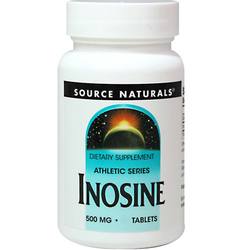
The brand we have been using is Source Naturals, which I bought through amazon for a fraction of the cost of the Rx (about one-sixth)...plus free shipping instead of $30 to ship from Canada!

So, all in all, things are going well. At this point, given the huge price difference, we will probably stick with inosine even if Imunovir becomes available again.

NOTE, as of September 2019: Source Naturals is still our favorite brand of inosine, but all brands of inosine have been unavailable from Amazon lately, so I have been buying ours from e-Vitamins, which has low prices and fast shipping:

Source Naturals Inosine  - 120 Tablet

Wednesday, May 14, 2014

Paleo Chocolate-Nut Butter Smoothie


[Updated 11-26-24]

This smoothie is not only delicious and nutritious but will also help to improve glutathione levels, which should help your mitochondria, immune system, and energy production. What a package deal! And if you're on a low-sugar diet, it tastes decadent, even though it isn't. 

This is a recipe we made up when we started eating a Paleo/anti-candida diet. It has become a favorite at our house. My son especially loves these, and I eat them frequently, too. It works equally well for breakfast or lunch (or dinner or a snack!).

NOTE: A word on whey: I had read for many years ago that whey protein powder is good for people with ME/CFS because we have low glutathione levels, and whey is a glutathione precurser. However, I always assumed that I couldn't try that particular treatment because I am intolerant to dairy. When we started on our new diet in February 2014, our dietician explained to us that most people who are dairy intolerant can tolerate whey. It is the part of the milk that is left after the curds are removed (remember Little Miss Muffet and her curds and whey?), and the curds contain most of the casein and lactose, which account for most dairy sensitivities and allergies. So, we tried it and found that both my son and I tolerate it pretty well. I later found that I am mildly intolerant to whey if I eat it too often, but if I have a whey smoothie 2-3 times a week, I'm fine. More tips on how to increase glutathione.

Just be sure to read labels and choose the right kind of whey protein powder. Some contain all sorts of additives (including grains that should be avoided on paleo or anti-candida diets). This article on whey and glutathione explains what to look for. Generally, look for undenatured whey protein powder and a label with a very limited ingredients list. This is the brand we like.

NOTE: For those struggling with severe yeast overgrowth, as I am, I have included options to make it even more anti-candida-friendly. And please check out my blog post on Treating Yeast Overgrowth/Candida.


Chocolate-Nut Butter Smoothie
Makes 1 serving
We often double the recipe for 2 people
Extra anti-candida (no sugar) options in ( )


ADD TO BLENDER:
1/2 - 1 banana, cut-up and frozen (can substitute ice cubes made from dairy-free milk of your choice)
1/4 of an avocado (a half for anti-candida since it contains almost no sugar)
1/2 cup frozen organic blueberries (often OK on anti-candida diet; they are low in sugar, but can be left out if yeast is severe))
1 Tbl sunflower seed butter or any nut butter or natural peanut butter (check label for sugar) *
2 Tbl raw cacao powder (this is the raw form of cocoa and full of antioxidants)
1/2 tsp stevia or xylitol (this brand of stevia and xylitol actually fight against yeast)
1 cup unsweetened coconut milk or your favorite unsweetened non-dairy milk substitute - as much as needed for the desired thickness

OPTIONAL INGREDIENTS:
1 Tbl MCT oil - good for energy and yeast overgrowth - our favorite whey powder includes this
1-2 scoops creatine powder (an unflavored, no-additives, fine powder works best - provides energy and helps with exercise tolerance)
3 ice cubes made from unsweetened nondairy milk (if not using frozen fruit)
1 tsp alcohol-free vanilla * (if not in your whey powder or to make a vanilla shake if leaving out cacao) 
 
ADD AT THE END:
1-2 scoops plain undenatured whey protein powder (depends on the size of the scoop - about 31g)
 
* Trader Joe's is a great source for inexpensive, delicious sunflower butter, nut butters, and peanut butter. Wherever you buy, check the ingredients list on the label - the brands with only seeds, nuts, or peanuts (with or without salt) are best. They also have excellent, inexpensive alcohol-free vanilla extract.

  1. Put all ingredients except whey in a blender, and blend on high until smooth. Add more or less nondairy milk to get the consistency the way you like it.
  2. Add whey powder and gently stir in (I use a small silicone spatula) until fully combined with no lumps. Some sources say that using a blender on undenatured whey powder will damage the delicate proteins, leaving it less beneficial, so I stir it in at the end.
 
© Suzan L. Jackson 2024
(Do not reprint or publish without written permission from the author)

We love our Ninja blenders for smoothies! We use this one for doubles and this one for single servings.


Note: This post contains affiliate links. Purchases from these links provide a small commission to me (pennies per purchase), to help offset the time I spend writing for this blog, at no extra cost to you.

Monday, May 12, 2014

International ME/CFS Awareness Day 2014

It's International ME/CFS Awareness Day!

Looking for ways to help spread the word? Here is what I am posting on my Facebook wall for my friends and family (to keep it manageable, I only friend my family and in-person friends on Facebook), along with a link to this post:

"Today is International ME/CFS Awareness Day. ME is Myalgic Encephalomyelitis, the name by which this devastating illness has been historically known throughout the world, and CFS stands for Chronic Fatigue Syndrome, the cringe-worthy name the CDC saddled us with in the 1980's. I have had ME/CFS since March 2, 2002, and both of my sons have had it since 2004. Scientists have confirmed that this disabling illness has both genetic and infectious components, though they have not yet pinpointed the cause(s) or cure. At its heart, ME/CFS is an immune system disorder, causing parts of the immune system to over-react and parts of it to under-react. In a devastating cascade of effects, it causes problems with the immune, endocrine, and nervous systems. The mitochondria (i.e. energy producers) in our cells don't work properly and don't process oxygen normally so that even mild exertion - like a short walk or going up the stairs - can result in suddenly feeling as if we have the flu, and those effects can last days or even weeks. Thankfully, Craig's ME/CFS is mild and easily controlled with medication. Jamie and I have both had some mild success at reducing symptoms though we take piles of pills every day and our lives are still dramatically different than they were before ME/CFS (Jamie also has Lyme and 2 other tick infections, too). We are the lucky ones; many people with ME/CFS are housebound or even bedridden. For more information and to learn how to help, check out this blog post." (with a link to here)

Besides helping to educate your friends and family (most of whom probably want to know more but don't know how to ask you), here are some other ways to help further ME/CFS education and research:

  • Learn more about ME/CFS. Here are some sources of information you can share with others:
  1. What is ME/CFS? by the CFIDS Association at Solve CFS
  2. An Overview of Chronic Fatigue Syndrome by Phoenix Rising
  3. The CDC's information on CFS
  4. My own article, CFS: An Invisible Illness, published on Lively Woman (now BlissTree)
  5. Our public testimony on pediatric CFS at last year's CFSAC meeting.
Happy Awareness Day!  Help to spread the word!

(feel free to link to this page or share its information)

Wednesday, May 07, 2014

Paleo Coconut Custard Pudding

I Tweeted today about the homemade Paleo Coconut Custard Pudding I made myself for my sore throat, and several people asked for the recipe. so I thought I'd post it here.

Just a quick diet update...we are still eating mostly Paleo/anti-candida diet, as I describe in this post on diet. My son is still doing well, so the dietician has allowed him a wider variety of fruits and vegetables now, and even red-skinned potatoes once a week. He's also allowed nuts now. He doesn't really like them on their own, but using nut flours gives me a lot more Paleo baking options. We are still very low-sugar due to our history with yeast overgrowth (both my son and I), so you will see that this recipe calls for a bit of stevia. If sugar is not a problem for you, you can just use the full amount of maple syrup or honey (as indicated below).

Enjoy!

Paleo Coconut Custard Pudding
(6 servings)

When I was a little girl and got sick (I used to get strep throat a lot), my mom would make me classic baked custard to soothe my sore throat. Custard is still one of my favorite treats, so I came up with this non-dairy, low-sugar version and added coconut (which I also love and is anti-fungal). If you don't like coconut, you can leave out the shredded coconut and/or substitute some other non-dairy milk.
4 eggs
2 cups unsweetened coconut milk (the kind in a carton) or other non-dairy milk
1/2 cup maple syrup or honey (microwave honey for 20 seconds to liquefy)
          OR Low-sugar version: 2 Tbl honey or maple syrup + 2 tsp. stevia

OR No sugar version: 4 tsp stevia (we like Truvia brand)

1/4 tsp. salt
1/2 cup unsweetened shredded coconut (optional)
Preheat oven to 325 degrees.
Whisk eggs and combine all ingredients. Add shredded coconut last and stir to combine.

Pour mixture into glass custard cups.

Set cups into a large baking dish, and add boiling water to the large dish (around the cups) to a depth of about 1 inch.

Bake 30-40 minutes or until knife inserted into center of custard comes out clean.

Remove from oven and remove custard cups from water bath (carefully!). Let cool and then refrigerate to chill.
 
© Suzan L. Jackson 2024
(Do not reprint or publish without written permission from the author)


Note: This post contains affiliate links. Purchases from these links provide a small commission to me (pennies per purchase), to help offset the time I spend writing for this blog, at no extra cost to you.

Tuesday, May 06, 2014

What's Happening in the ME/CFS World?

Between other commitments, including my family and the ME/CFS Parents group I started on Facebook, and my recent focus on researching and writing about one particular aspect of ME/CFS treatment - methylation and B12 supplementation - I have been having trouble staying up-to-date on what's going on in the wider world of ME/CFS. And there is a lot going on!

This is actually a very exciting time in the ME/CFS world, with new research opportunities, government initiatives, an effort to decide on a single case definition, efforts in the FDA, and more. Some of these efforts are wonderful advances forward, some include participants who need better direction from the patient community, but all of them represent opportunities for potential advancement for our illness which has historically been ignored.

Since I haven't been keeping up very well, that means that I haven't been writing much here about these events and helping YOU to keep up. I am going to try to rectify that by at least posting links here more frequently so that you can keep up to date, if you want to.

The #1 best source for staying abreast of this sort of news related to politics, research, government, and the whole ME/CFS community is Jennie Spotila's blog, Occupy CFS. Jennie is a friend of mine who used to work as a lawyer. I deeply admire both her tireless advocacy efforts and her talents and abilities to stay up-to-date on all of this and explain it clearly and fully in her blog posts. So, please sign up for her blog updates, if you'd like to know what's going on in the larger ME/CFS world in a timely manner.

Here are a few of Jennie's recent posts, to bring you up-to-date on important, ongoing efforts.

Research Roadmap
Back in mid-April, Jennie wrote about a Research Roadmap, a fascinating effort from within the CFS Advisory Committee (CFSAC) to bring greater attention and funds to ME/CFS research from the larger medical research community. This sounds like a very worthwhile effort (though it may take a while to get there), and I look forward to hearing more.

FDA Draft Guidance for ME/CFS
Jennie also reported that the FDA hosted a webinar on April 23 to explain their new Draft Guidance for Industry CFS/ME: Development Drug Products for Treatments. This is guidance that the FDA provides to drug developers. This is great news - FDA is actively trying to communicate to drug developers about ME/CFS and providing this guidance can help developers to properly design their drug trials. In her blog post, Jennie explains the details from the webinar, with links to more information and a link to submit comments.

IOM Diagnostic Criteria for ME/CFS
Have you heard about this government-based effort to develop a single agreed-upon set of diagnostic criteria for ME/CFS? This one started last year, and at first glance, this would appear to be great news. A single case definition for ME/CFS that all parties (government, patients, researchers) agree to is an essential element that has been missing from the ME/CFS world for far too long. However, there are some serious concerns with the effort. The Institute of Medicine (IOM) was chosen to lead the effort, and their efforts last year with Gulf War Syndrome (which has a lot in common with ME/CFS) were disastrous.

In short, this new IOM effort to define diagnostic criteria for ME/CFS has already attracted a lot of controversy. Many people - including some top ME/CFS clinicians and many patients - believe this effort is completely unnecessary and that a perfectly good definition already exists - the Canadian Consensus Criteria (CCC) - that just needs to be adopted by the NIH. So, there is a grassroots effort to stop this IOM effort entirely. Personally, while I like the CCC and would be happy with its adoption, I know our government is famous for a Not Invented Here bias. They want to develop stuff themselves even if it already exists. That's how we ended up with the ridiculous name Chronic Fatigue Syndrome from the CDC in the 80's, even though Europe had been calling this illness Myalgic Encephalomyelitis for decades. So, for me, I feel that it's a waste of my valuable, limited energy to protest an effort that is already under way.

So, here is a peek into some of the IOM controversy, from Jennie's blog. And if you want to catch up on the whole saga, here are all of Jennie's posts tagged IOM.


P2P Workshop
From what I've heard, this is the effort we should be most concerned with. The Pathways to Prevention (P2P) program is operated under NIH's Office for Disease Prevention, and the process began with a P2P Workshop for ME/CFS in January. The problem is that the process has been cloaked in secrecy and many aspects of it have not been open to the public. Here is Jennie's initial explanation of P2P. Unfortunately, it seems that things have gone from bad to worse.

The worst aspect of this process is that the P2P will develop recommendations on diagnosis, treatment, and research of ME/CFS with a panel of medical experts who know nothing about ME/CFS. Yes, you read that right. Stunning, isn't it? They've begun this process with a systematic evidence review of existing information, and in this recent post, Jennie breaks down the problems with the initial P2P protocol for the evidence review. Most disturbing of all is that this protocol looks like it will lump ME/CFS patients in with people with all sorts of undefined fatigue with no other symptoms required.

Whew. I told you there was a lot going on! There are lots of opportunities for moving forward in a positive way for ME/CFS patients...but also plenty of chances for things to go horribly wrong for us and for our patient community to end up worse off than we already are (if you can imagine that).

I am going to make a sincere effort to stay better informed and to keep you informed also. But I highly recommend following Occupy CFS for up-to-date information on all of these topics (and more). And I will especially try to let you know whenever there are opportunities for patients to get involved, submit comments, and make our voices heard. That's the good news in all of this - the patient community has made great strides and has never been better organized to make sure that we make the best of any opportunities for our input.

Friday, May 02, 2014

IACFS/ME Conference Science Summary

Back in March (how can it possibly be May already?), the annual International IACFS/ME Conference was held in San Francisco. I wasn't able to attend the conference, but I came across this wonderful summary that I wanted to share with you.

In this 51 minute video, Dr. Anthony Komaroff, a renowned ME/CFS specialist, summarized the main ideas from all of the biological research talks presented at the conference. It provides a great overview not only of the conference, but of the cutting-edge of ME/CFS science research right now. Even if you don't understand some of the technical points he covers here, I think you will find the scope and breadth of the research being done truly astonishing. There are many doctors dedicated to digging into the physiology of our crazy illness, and it gives me a lot of reasons to be hopeful for a better future for ME/CFS patients!


I've really fallen behind in keeping up with this sort of thing lately, so if anyone has any other resources or links to share from this conference or other sources, I'd love to hear about them.

Remember that you can now follow Learning to Live with ME/CFS on Twitter and on Facebook!